
Floating planters to make the Theodorushaven greener
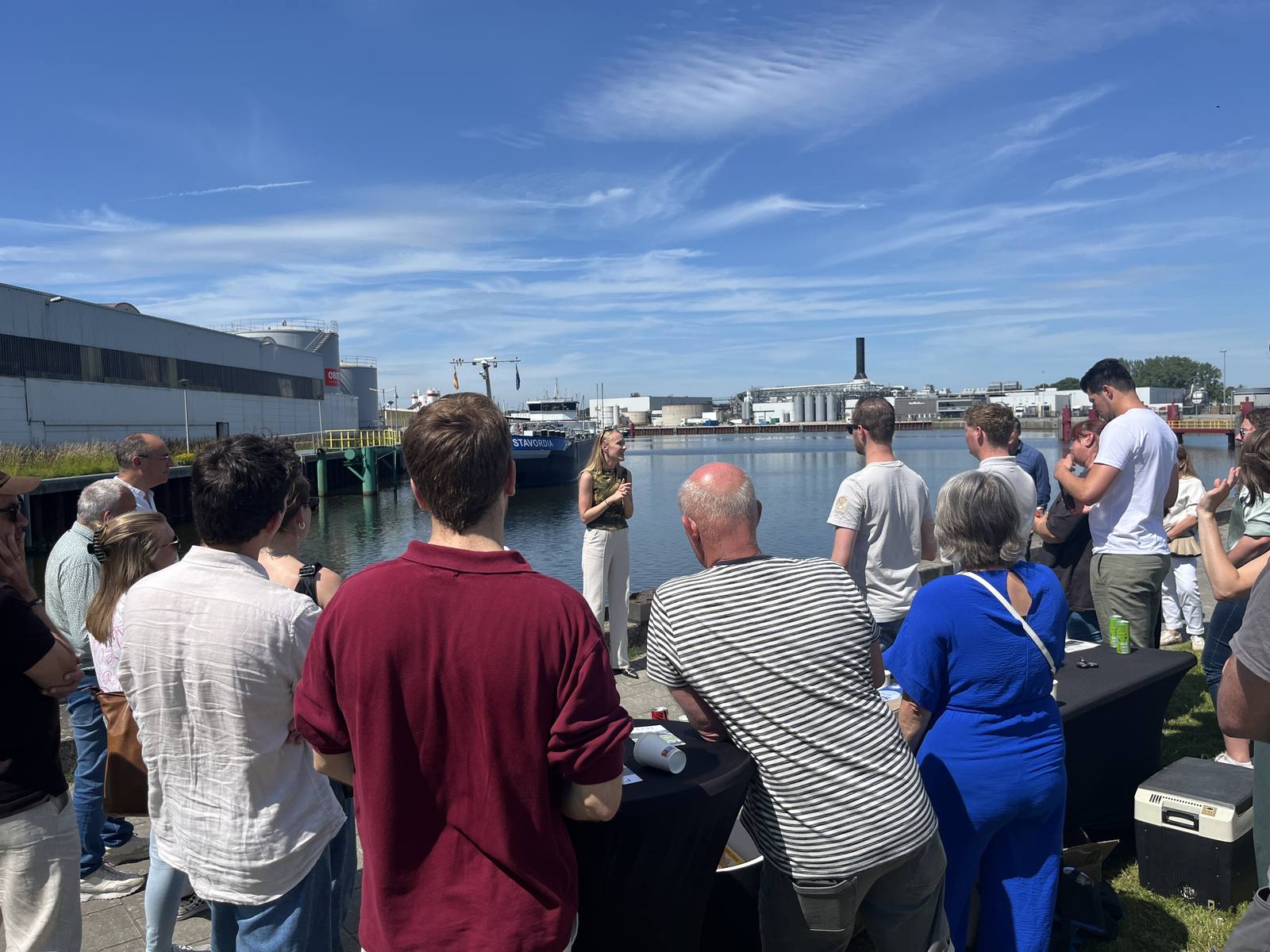
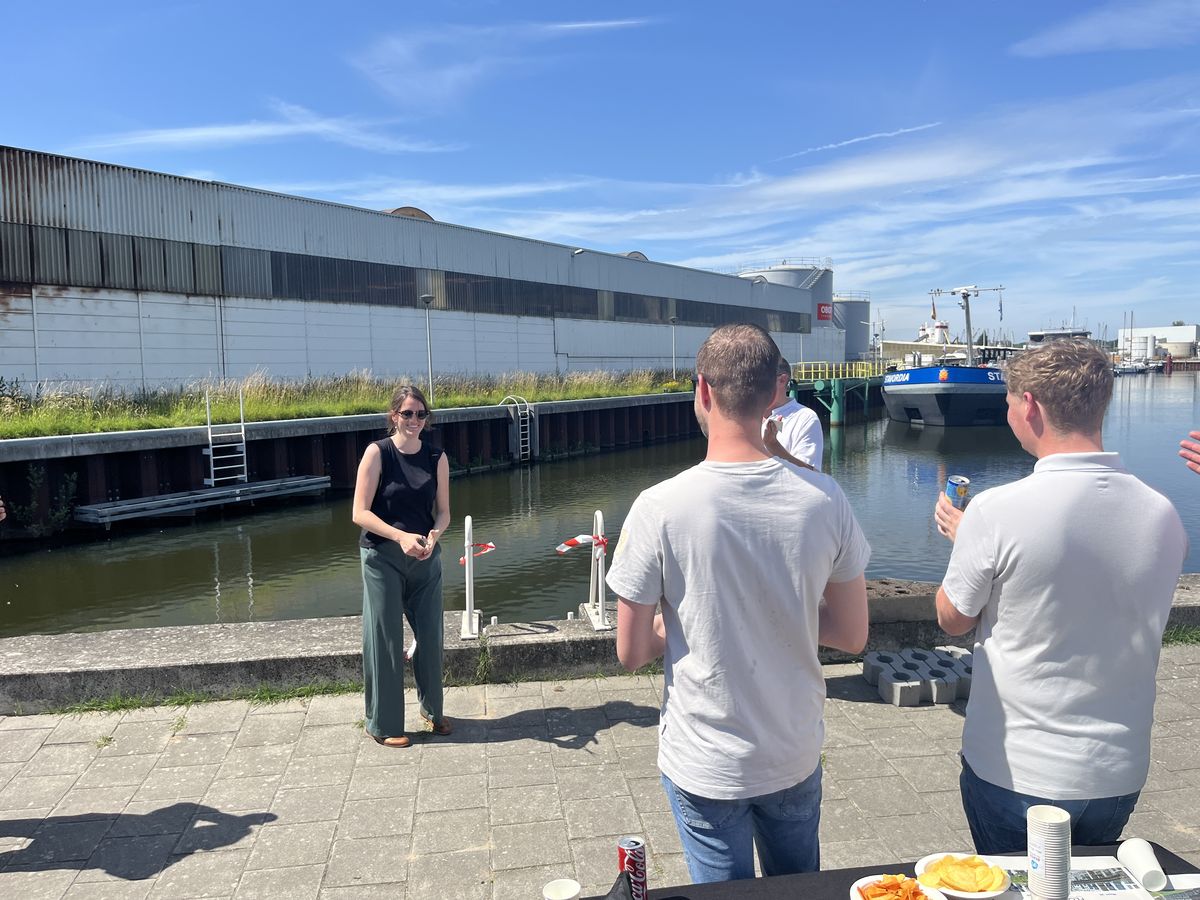
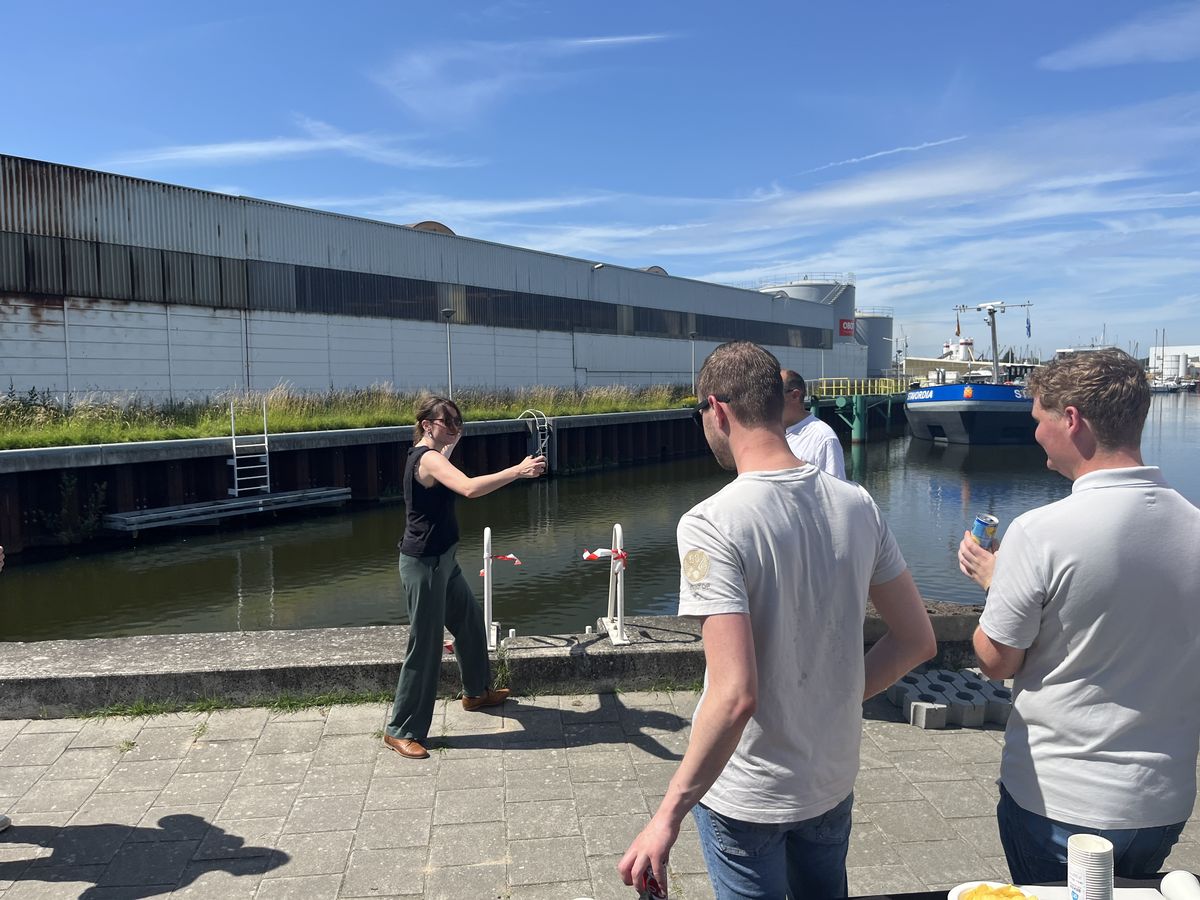
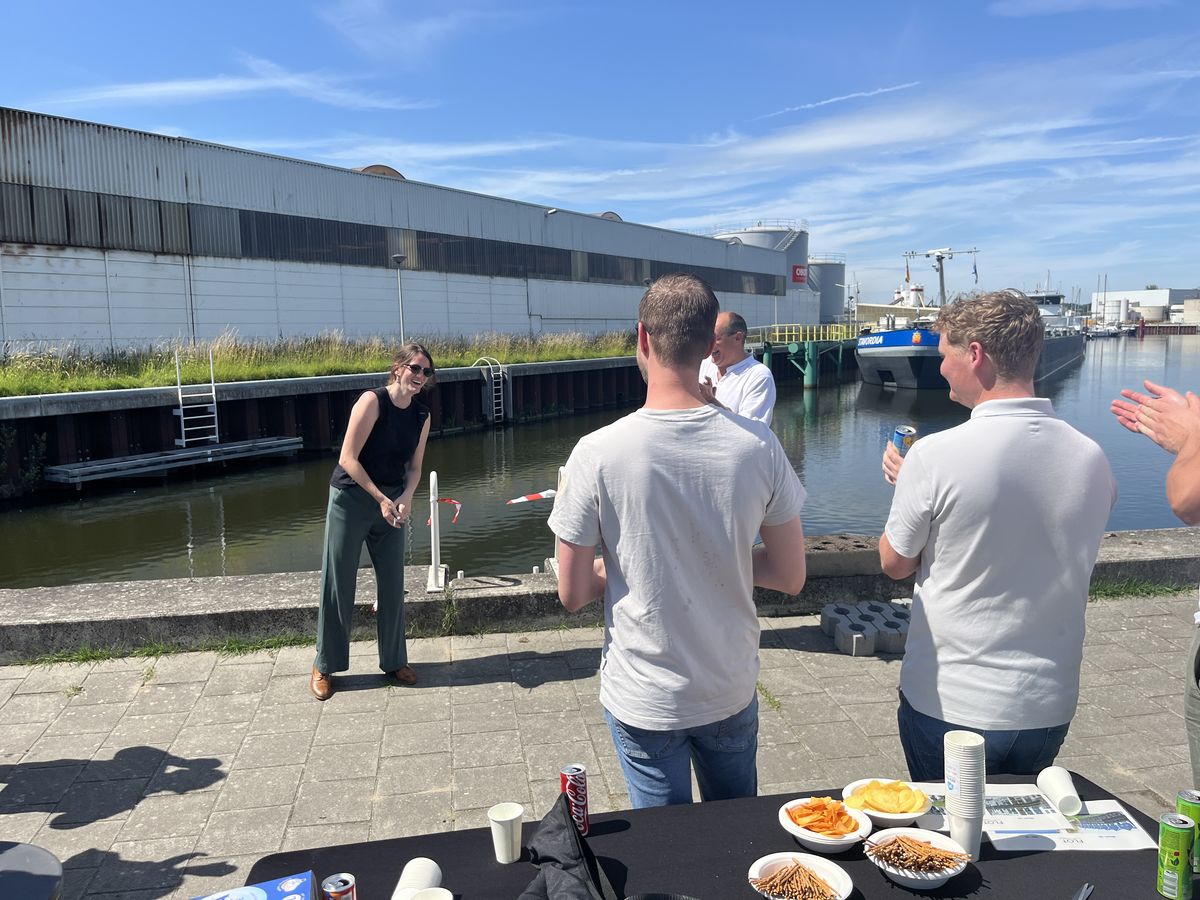
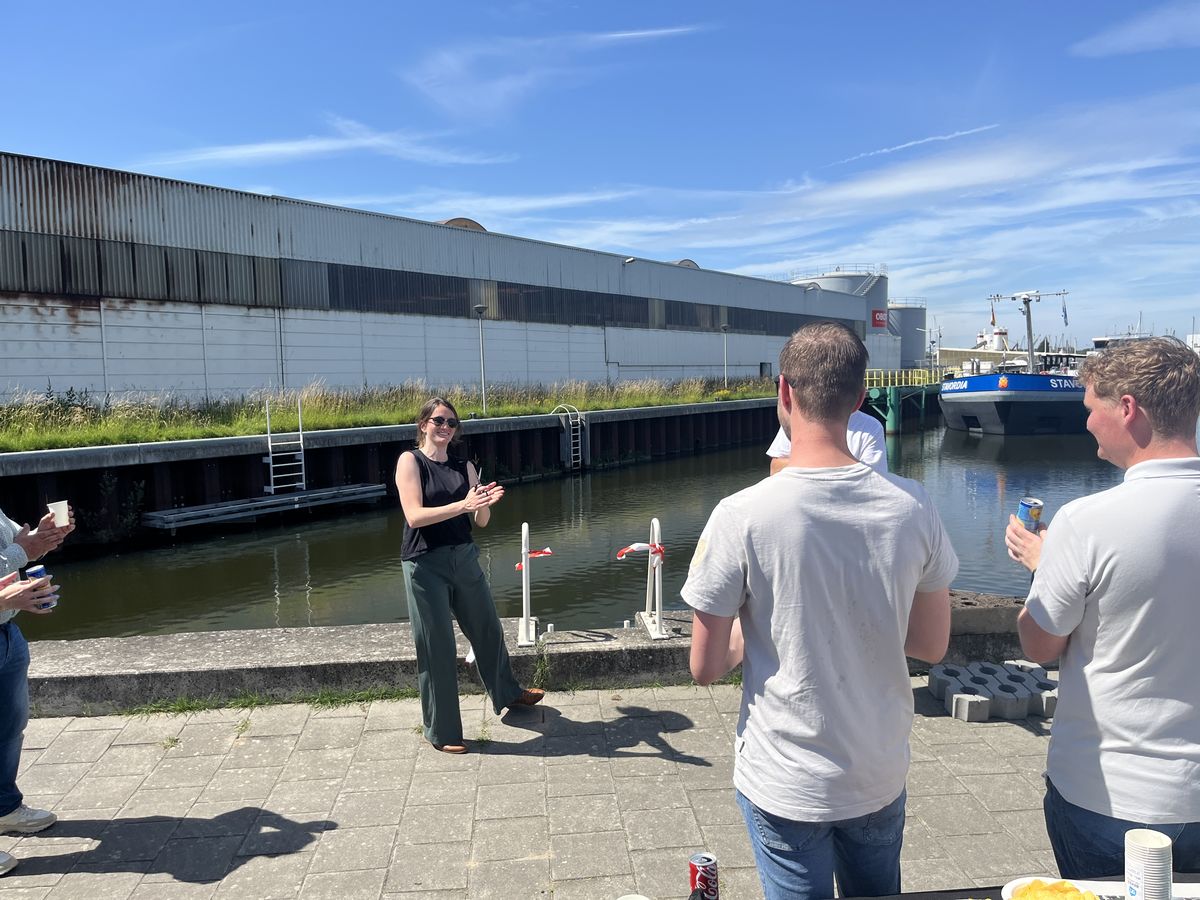
Since this week, ten planters have been floating between the ships and steel sheet pile walls of the Theodorushaven. They are the first FLOT. sheet pile greening units in Bergen op Zoom, an initiative of the local companies Dutch Water Tech and MH Poly Consultants & Engineers. With the pilot, the initiators want to prove that even an industrial harbour can become a lot greener and more biodiverse.
The structure looks simple: a floating planter of stainless steel and cork, attached to the sheet pile wall. Yet according to co-initiator Bard Louis of MH Poly, there is a lot of engineering behind it. “Flot. was designed to green sheet pile walls. Those are the rusty brown planks you see along the water. Very little grows on them,” he explains. Because the planters move with the water level, the plants always get enough water. Under water, a network of roots and hiding places for fish also develops.
“We want to see whether our idea is robust enough to be used widely.”
The choice of the Theodorushaven is no coincidence. The harbour is an industrial area where commercial shipping causes waves and currents. Those are exactly the conditions that make it an ideal test location. “This is exactly the kind of place where ships turn and where we have a lot of waves and currents. We want to see whether our idea is robust enough to be used widely,” says Louis. In the coming period, the team will closely monitor whether the planters stay in place, show wear and whether the plants develop well.
Success in Oudenbosch
The high expectations are partly due to earlier experience in Oudenbosch. Dozens of the floating modules have been hanging there since 2024. “It's completely green there now. Residents are very enthusiastic and it turns out the planters stay in place very well and need very little maintenance,” says Louis.
Environmental project leader Puck Oomen of MH Poly also sees great opportunities for Bergen op Zoom. In her view, the planters can act as stepping stones for different species. “They attract insects, butterflies, and we've even seen frogs. Under water we see fish, mussels and other aquatic animals settling. That improves both biodiversity and water quality.”
“It's literally a five-minute walk to show clients what we do.”
For Dutch Water Tech director Mark den Dubbelden, it is extra special that the project can be seen in his own town. “It's literally a five-minute walk to show clients what we do.” Almost all parts of the planters also come from the region. Local companies supply the stainless steel, the cork and the assembly, while employees of the social employment company WVS assemble the planters and fit them with aquatic plants. “The lines are very short and we think that cooperation with the sheltered workshop is very important,” says Den Dubbelden.
The initiators financed the pilot themselves. They hope that municipalities and water authorities will eventually invest in a wider roll-out. “I hope many people will say: ‘hey, I think this is nice and important’. So that other municipalities or water authorities will also say: I want a green harbour or a green canal like that too.”
Text: Vincent Krijtenburg (translated from Dutch)
Publication (Dutch): https://www.zuidwestupdate.nl/nieuws/drijvende-plantenbakken-moeten-theodorushaven-groener-maken/
Photos of this project
Klik op de foto voor een grote weergave.